

Hearing Wrap Up: USPS Needs Reform to Stay Financially Afloat
WASHINGTON—Yesterday, the Subcommittee on Government Operations held a hearing with the Commissioners of the Postal Regulatory Commission (PRC) to build on the Subcommittee’s broader work examining the U.S. Postal Service’s (USPS) ongoing financial challenges and identifying ways to improve service and increase revenue. In the hearing, members heard from PRC Commissioners about steps being taken to address USPS’s well-documented financial issues and improve service delivery to Americans across all parts of the country.
Key Takeaways:
The U.S. Postal Service has delivered essential mail to businesses and households across the nation for nearly 250 years, including hard to reach rural communities.
- Postal Regulatory Commission Vice Chairman Robert Taub testified that “The U.S. postal and delivery sector represents a nearly $2 trillion a year industry with almost 8 million jobs, making it vital to our economy. However, the Postal Service is in a serious financial crisis, operating under an unsustainable model, and the commission, along with the [Government Accountability Office], the [Inspector General], President Trump’s Treasury Task Force on the Postal System, and the Postal Service itself have all pointed the way forward.”
- Postal Regulatory Commissioner Ann Fisher testified that “My point is that while delivery options and consumer expectations continue to evolve, rural and remote communities still rely on the Postal Service for affordable delivery of mail and packages. This presents both a challenge and an opportunity to evaluate the current needs of Postal Service stakeholders.”
- Postal Regulatory Commissioner Ashley Poling stated that “Even in a world dominated by electronic communication, especially for the nearly 66 million rural Americans, the Postal Service continues to fill an important role, not just as a communication channel, but as a lifeline for rural residents ordering pharmaceuticals and other necessary medical items and an economic engine for local small businesses reaching their customers.“
USPS’s financial condition and service reliability remain in serious trouble. Congress must take decisive action to address structural challenges, strengthen the Postal Service’s long-term financial sustainability, and improve the quality, consistency, and speed of mail delivery for the American public.
- Vice Chairman Robert Taub testified that “The Commission also cautions against endorsing the postal service’s plan to move full steam ahead with what, in essence, is the delivering for America plan [Delivering for America] plan that promised break even operations by 2023, and a cumulative ten-year net income of $200 million. In fact, now in year six of the ten-year plan, the postal service has incurred $31 billion in losses and is on the path to losing even more in the remaining four years of its implementation. It is a plan that promised to streamline and save the postal service $28 to $40 billion by 2030, as initially estimated. Yet implementation of the plan has slowed mail delivery across the United States, particularly in rural areas, which to a greater extent rely on affordable and reliable mail delivery. Further, the mounting financial losses continue, a situation the commission warned about on several prior occasions.”
- Commissioner Ann Fisher also stated that “The Postal Service was designed to be self-funded, but has not reported an annual profit in roughly the last decade. Over just the last three years, cumulative net losses totaled about $25 billion, underscoring that the current trajectory is not self-correcting. Given this backdrop, the Commission has had to make difficult decisions, Vice Chairman Taub noted. The waiver. We recently granted the Postal Service allowing for emergency liquidity relief. The Postal Service is also seeking congressional assistance in the form of an increased debt limit, an annual appropriation to fund universal service and other items, all of which deserve fair consideration.”
- Commissioner Thomas Day testified that “We were correct in what we stated last year. It is almost certainly a better solution for the Postal Service to step back from DFA and properly design and implement an optimized network within the physical network that already exists. It will take some time to study, approve, and implement a revision to the [USO]. As that effort is underway, properly designing and implementing a revised postal network is critical. This is a value for the immediate future, but it also will create a framework for future updates as change will continue to take place throughout the postal industry.”
- Commissioner Poling also noted that “The situation facing the Postal Service is a five-alarm fire. Volume of traditional mail continues to decline, a result of both ongoing electronic diversion and an acceleration due in part to the postal service’s aggressive pricing strategy. And at the same time, service quality continues to suffer as the leadership of the Postal Service has decided to slow service standards for several mail products over the last five years, including twice for the flagship first class mail product, while also lowering its service performance targets. What this means is simple the American people are paying more, while fewer mail pieces are being delivered in the expected time frame as declining mail volumes and an increasing number of delivery points continue to put financial pressure on the postal service, the incentive to underperform service expectations can be expected to increase.“
Congress must work with the Postal Regulatory Commission and Postmaster General to make the hard decisions to reform the Postal Service.
Member Highlights:
Subcommittee on Government Operations Chairman Pete Sessions (R-Texas) asked about the USPS’s reliability and costs of delivering packages to rural areas and how competition with the private sector could affect this.
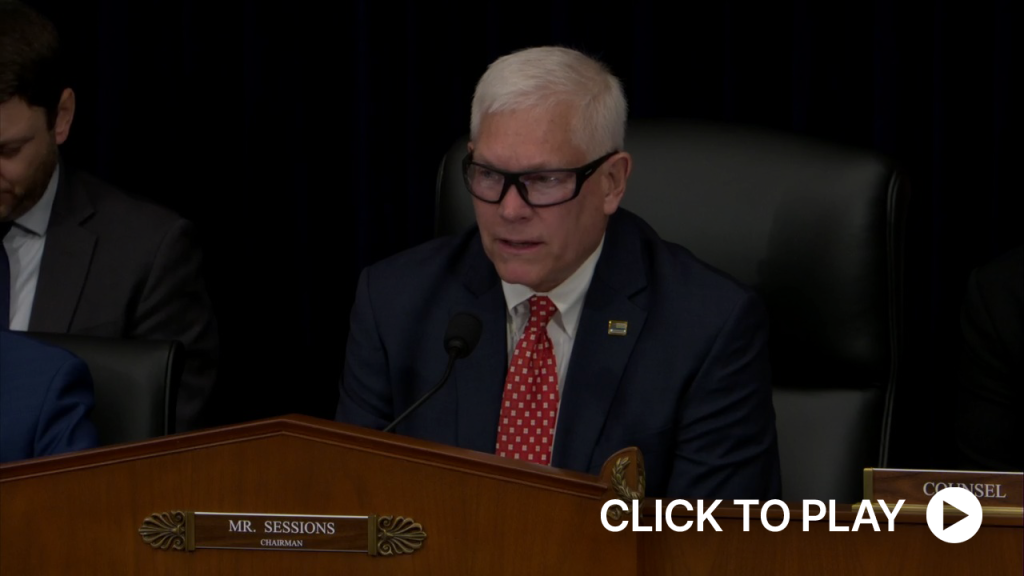
Subcommittee Chairman Sessions: “Does that mean that there would be some observations about what I would call ‘rural delivery’ of these packages versus city or suburban, large areas, middle areas, [other] parts of the country? How might we look at what you’re saying? Or how should we look at to evaluate what the postal service is looking at for delivery of these boxes?”
Commissioner Fisher: “The postal service still has, in general, the least costly service available for the delivery of the packages. But there is an immense effort. I read an article the other day about how both Amazon and Walmart, who have made a concerted effort to build up their space into rural remote areas, and they’ve also noticed that it’s not just the people who’ve lived there, but as more and more people telework, they are moving into these rural or remote areas. So Amazon and Walmart are in a race to try and best serve that community. You pay a price for it with your membership in each one, but you can get same day delivery, but from the Postal Service, if they could just improve again, their reliability and their perhaps their tracking capabilities, it would go far.”
[…]
Subcommittee Chairman Sessions: “Ms. Poling, you have spoken very eloquently about rural customers’ expectations and the things which are part to their satisfaction as well as, as Mr. Day just said, the effective operation of money. What conversation would you have with me about competition to that, what might be called ‘last mile,’ or the competition angle with the Post Office and other competing factors? Maybe Amazon, maybe someone else, UPS, could be, but that’s competing in that market. Can you put us in that world of, of how that works and what those issues might be?”
Commissioner Poling: “I will do my best… for many, many more years. And I think, you know, again, getting back to this universal service obligation, that’s sort of why I think we need to start having these conversations. What I worry a lot about is that in these rural areas, right? It’s not always as profitable to deliver to them. Right. And so, and unlike the Postal Service, private carriers have the option of deciding not to right, not to deliver to those areas or to or to charge rural surcharges. The Postal Service has to be accessible and affordable to everyone…I worry about the impact that this will have on rural America, where it is costly to deliver to those areas. And these folks, you know, it is their lifeline and it is something that they really rely on. So I think all of those conversations need to be had. And I think I will say this too, I think there’s tremendous opportunity to be had with the private sector as well. I think there have been a lot of great relationships that have been created, right, with Amazon, with others, and I think all of those things, nothing should be off the table.”
[…]
Subcommittee Chairman Sessions: “I would say to you that I said to you, and you know, this, what are the tough decisions that the postal service has had to make? What are the really hard questions that they have had to face down? And you gave me a good answer. I want you to know that these are the things that are aimed right at Congress right now. What really hard decisions are we willing to not just ask the questions, but the decisions we’re going to make? And perhaps the one that each of you have put back right at [Ranking Member Mfume] and I at least myself, what is that standard going to be? What’s the plan? What is the service going to look like? These questions need to be answered before you answer the other.”
Rep. Tim Burchett (R-Tenn.) inquired whether USPS would eliminate unprofitable pieces of mail and whether the presence of unions drives up labor costs.
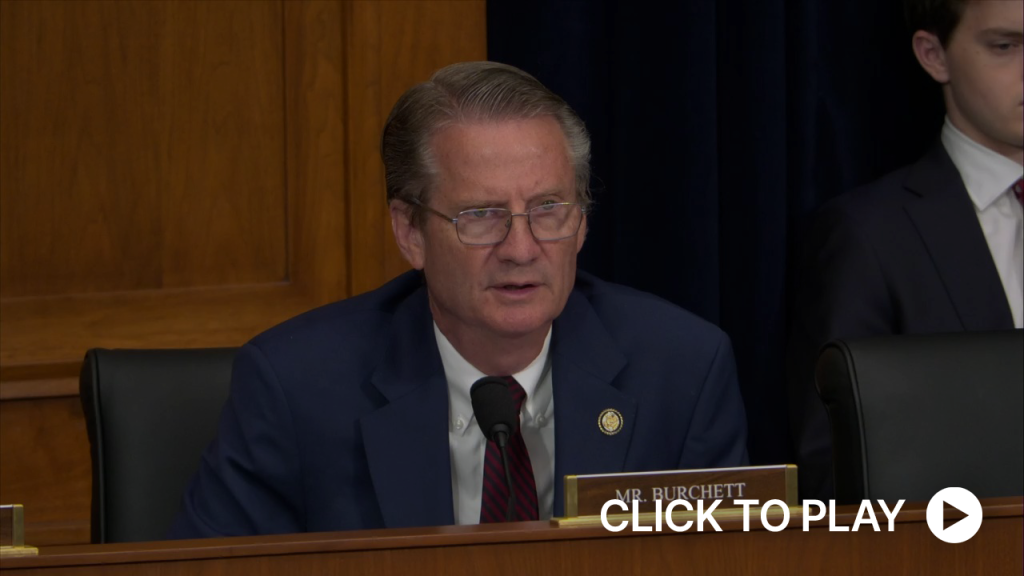
Rep. Burchett: “So, what you said there, does every category of marketing mail make money, including the flats?”
Vice Chairman Taub: “Flats is one of the areas marketing mail flats where they are losing money. But the rest of marketing mail is actually contributing quite a bit to the overhead.”
Rep. Burchett: “Okay. Given that those are unprofitable, would you all recommend the Postal Service phase out or restrict some of those products?”
Vice Chairman Taub: “What we have done in the rate system that we’ve designed is require the Postal Service to increase those rates to better cost coverage, as well as look at reducing the costs. There is, in fact, in the 2022 law, a requirement that the Postal Service study this to get to that issue. We have looked at it. Unfortunately, it is a perennial problem that we’ve been concerned about for quite a long time.”
Rep. Burchett: “And what percentage of the postal employees fall under the collective bargaining agreements compared to possibly the non-postal federal employees?”
Vice Chairman Taub: “Certainly the large bulk of their workforce. I don’t have the percentage offhand. We could get to you, our collectively bargained employees. Those are the clerks, the carriers, rural and city and the mail handlers. That is the bulk of the Postal Service workforce.”
Rep. Burchett: “Now, does the high percentage of union folks give the Postal Service more or less flexibility to adjust postal functions?”
Vice Chairman Taub: “The collective bargaining requirements have been embedded in the statute since the Postal Service was created, so that does create a mandated process that would be different than other federal employees where they’re not under collective bargaining restrictions and mandates.”
Rep. Burchett: “What percentage of the postal service operating costs go to labor? And how can the federal government decrease that amount?”
Vice Chairman Taub: “Generally speaking, historically, the Postal Service, roughly 70 percent of the costs are for labor. It’s a very, you know, handicraft-focused business, but generally it’s been about 70 percent of the total cost of the Postal Service are for labor. While revenue has been increasing over, say, the last decade, the expenditures have been going up more than that. Just in the last five years, their costs have been going up ten percent, a variety of factors. But if you’ve got 70 percent of that as employee costs, that is going to be obviously a driving expenditure.”
Rep. Virginia Foxx (R-N.C.) asked about the problems USPS faces when investing in technologies that disrupt the private sector.
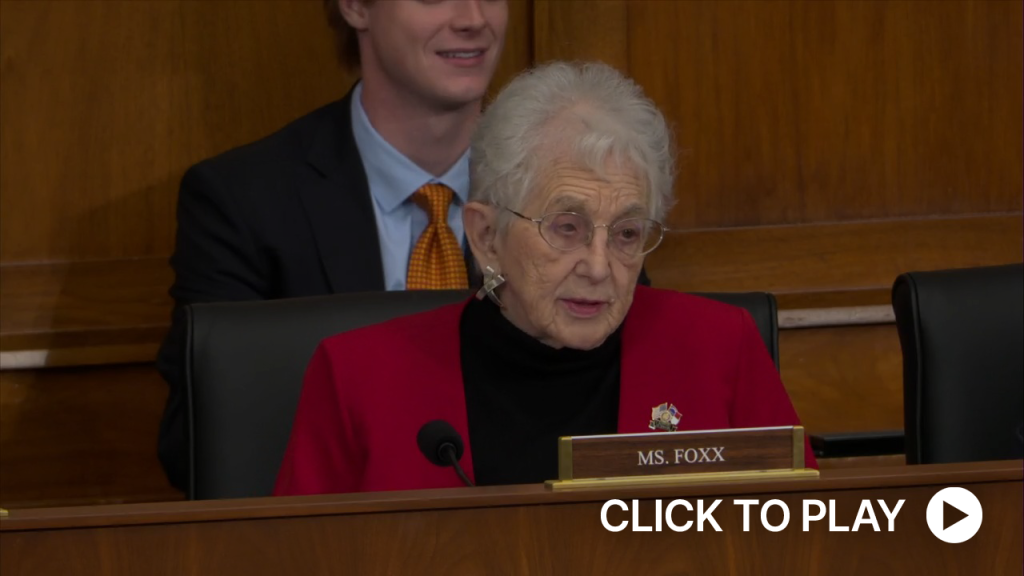
Rep. Foxx: “So what problems arise when the Postal Service invests in technologies that can disrupt private sector solutions, especially when those companies’ products are regulated by the postal service itself?”
Vice Chairman Taub: “Yeah, deeply, you know, you just go down the list. Not only that is then, adding and saddling the Postal Service and the rate payers with more costs that otherwise could be inflicted by leveraging the public private partnerships. But it’s affecting the private sector, the United States, the government establishment and commercial marketplace. We do have authority based on the 2006 law to police through complaint where the Postal Service is using its regulatory authority to unfairly compete with the private sector. And so those are areas that we’ve had a chance to police, but we have not actually adjudicated many of those complaints. But that is a deep concern, and we do have authority over that.” Click here to watch the hearing.
Legal Disclaimer:
EIN Presswire provides this news content "as is" without warranty of any kind. We do not accept any responsibility or liability for the accuracy, content, images, videos, licenses, completeness, legality, or reliability of the information contained in this article. If you have any complaints or copyright issues related to this article, kindly contact the author above.
