

New U.S. Apparel Compliance Rules Take Effect in July 2026
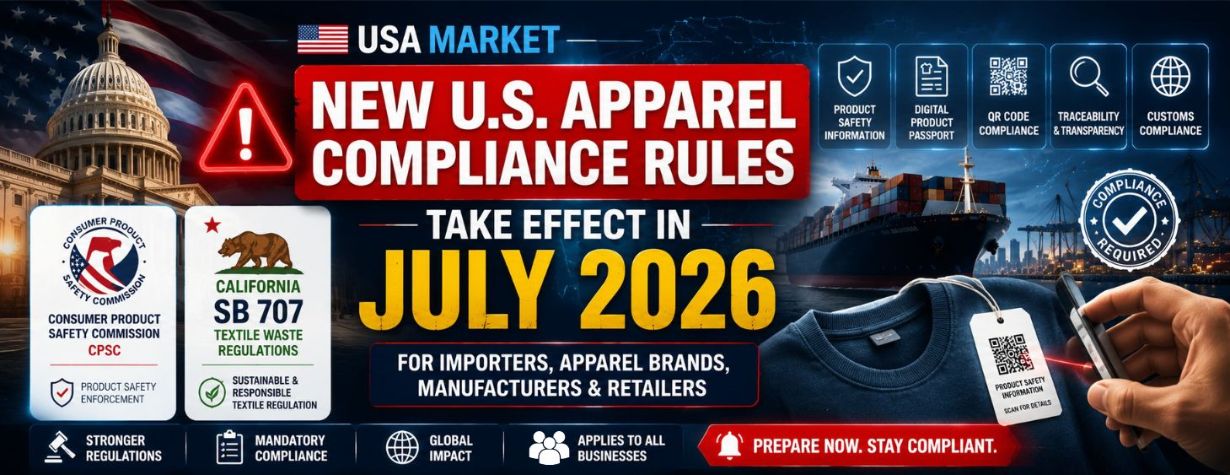
CPSC eFiling & SB 707: The Twin Regulatory Threats Confronting U.S. Fashion Startups
CPSC eFiling and SB 707 Should Be on Every Fashion Brand's Radar
new NoName logo
U.S. fashion brands face major changes with CPSC eFiling and California SB 707. Learn how these new rules impact apparel imports and compliance.
The apparel industry is entering a new phase of compliance and supply chain transparency. Beginning in July 2026, fashion brands selling products in the United States will need to navigate both the U.S. Consumer Product Safety Commission's (CPSC) mandatory eFiling system and California's Responsible Textile Recovery Act (SB 707).
The two regulations address different areas of the apparel supply chain. One focuses on product safety and customs clearance, while the other focuses on textile recycling and environmental responsibility.
Together, they represent one of the most significant regulatory shifts affecting apparel brands, private label clothing companies, retailers, and importers in recent years.
The rollout of CPSC eFiling & SB 707 begins in July 2026, with California's SB 707 registration requirements taking effect on July 1, followed by mandatory CPSC eFiling on July 8 for apparel imports entering the United States.
What is Changing?
For many apparel brands, importing products into the United States has traditionally involved maintaining compliance documentation that could be produced if requested by regulators.
That process is changing.
Under the new federal requirements, product safety information must be electronically available through the U.S. Customs system at the time goods enter the country.
As a result, apparel brands may face increased pressure to maintain accurate manufacturing records, testing documentation, factory information, and product traceability data before shipments arrive at U.S. ports.
Industry experts believe that compliance readiness will become a more important factor when selecting manufacturing partners, particularly for brands sourcing garments internationally.
The Major Shifts of July 2026
Real-Time Digital Filing Requirements
Importers can no longer rely solely on maintaining paper or PDF certificates after shipment. Required product safety information must be submitted electronically through customs systems.
No Small-Business Exemption for Product Safety
Federal product safety requirements apply regardless of shipment size. Small fashion brands and large retailers must meet the same filing requirements.
Increased Customs Visibility
Electronic systems allow regulators to review compliance information earlier in the import process, increasing the importance of accurate documentation.
Greater Supply Chain Transparency
Manufacturing locations, production dates, testing information, and product identification data are becoming increasingly important components of apparel imports.
1. The Federal Threat: CPSC Mandatory eFiling Launches July 8, 2026
The U.S. Consumer Product Safety Commission is implementing mandatory electronic filing requirements under updated regulations associated with 16 CFR Part 1110.
Under the new system, Importers of Record must submit product safety certificate information electronically through the Automated Commercial Environment (ACE) system used by U.S. Customs and Border Protection.
The filing requirements vary depending on the product category.
Adult apparel generally requires a General Certificate of Conformity (GCC), which confirms compliance with applicable safety standards, including textile flammability regulations.
Children's apparel for ages 12 and under requires a Children's Product Certificate (CPC), supported by third-party laboratory testing for applicable safety requirements such as flammability, lead content, and other regulated hazards.
The new process places increased emphasis on accurate factory records, testing export documentation, production traceability, and product identification systems.
2. The State Threat: California's SB 707 & Landbell USA Go Live July 1, 2026
At the state level, California is implementing SB 707, also known as the Responsible Textile Recovery Act.
The legislation establishes an Extended Producer Responsibility (EPR) framework designed to support textile recycling and recovery programs throughout the state.
California has designated Landbell USA as the approved Producer Responsibility Organization responsible for administering the program.
Brands that exceed specified revenue thresholds and sell apparel within California may be required to register and participate in the program.
The regulation places greater emphasis on material transparency and product composition reporting.
As a result, fashion brands may need increasingly detailed information regarding fiber content, fabric composition, garment weights, and material specifications.
Industry observers note that even brands currently qualifying for exemptions may benefit from establishing stronger material documentation practices as sustainability reporting requirements continue to evolve.
Why More USA Fashion Brands Are Looking for Compliance-Ready Manufacturers
The introduction of these regulations is encouraging many apparel brands to reevaluate supplier selection criteria.
Historically, sourcing decisions often focused on factors such as production cost, lead times, and minimum order quantities.
Today, compliance readiness, supply chain transparency, and documentation capabilities are becoming equally important considerations.
Brands increasingly require manufacturing partners that can provide accurate material specifications, production records, testing support, traceability documentation, and regulatory information that supports customs clearance and reporting obligations.
Why Fashion Brands Choose NoName
As a clothing manufacturer in India supplying apparel to the United States, NoName has focused on helping fashion brands adapt to evolving compliance requirements. The company supports private label brands, apparel retailers, fashion labels, and sourcing teams with detailed production records, fabric specifications, manufacturing traceability information, and documentation that supports U.S. import processes.
By providing transparency across material sourcing, production batches, and manufacturing data, NoName helps fashion brands maintain the records increasingly required in today's regulatory environment while continuing to scale their operations in the U.S. market.
Conclusion
The implementation of CPSC mandatory eFiling and California's SB 707 marks a significant development for the apparel industry in 2026.
As regulatory expectations around product safety, supply chain transparency, and environmental responsibility continue to increase, fashion brands will need stronger documentation systems and greater visibility into their manufacturing operations.
Industry leaders expect compliance readiness to become an increasingly important factor in supplier selection, import planning, and long-term supply chain strategy.
For fashion brands operating in the United States, understanding these new requirements and working with manufacturing partners that support transparency and documentation will play a key role in maintaining efficient operations as the regulatory landscape continues to evolve.
Pankaj Agrawal
Celestial Corporation
+91 96505 08508
pankaj@celestialfix.com
Visit us on social media:
LinkedIn
Instagram
Facebook
YouTube
New U.S. Apparel Compliance Rules Take Effect in July 2026
Legal Disclaimer:
EIN Presswire provides this news content "as is" without warranty of any kind. We do not accept any responsibility or liability for the accuracy, content, images, videos, licenses, completeness, legality, or reliability of the information contained in this article. If you have any complaints or copyright issues related to this article, kindly contact the author above.
