

California’s 2026 Building Energy Code & Refrigerant Mandates Reshape Commercial HVAC Planning Across Central Valley
Mechanical Air LLC provides expert commercial HVAC, refrigeration, and energy compliance services across the Central Valley.
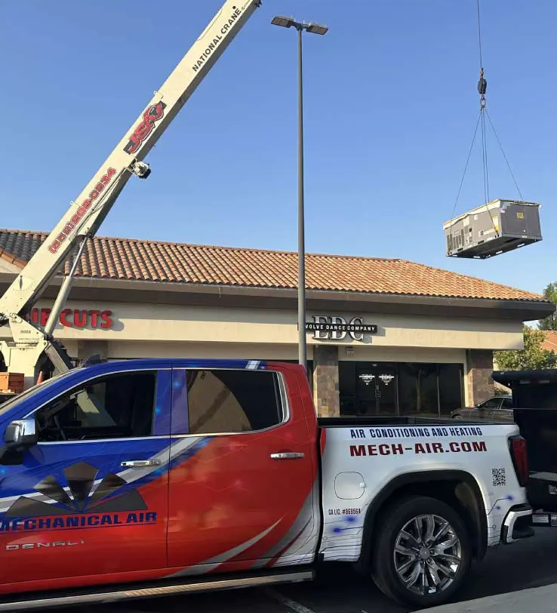
Mechanical Air LLC executing a complex commercial HVAC rooftop unit replacement and infrastructure upgrade in Fresno, California.
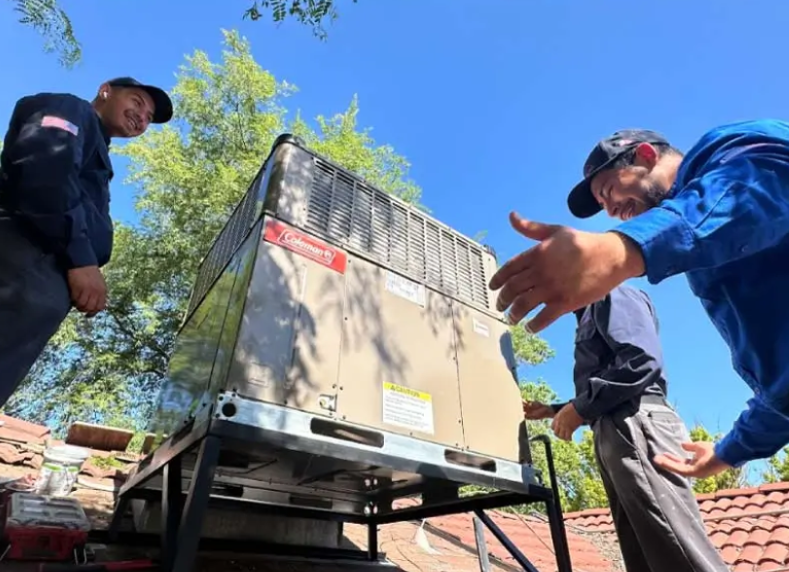
Mechanical Air LLC technicians performing professional installation and maintenance on a commercial rooftop HVAC unit.

Mechanical Air LLC providing expert HVAC repair and blower motor replacement services in the Central Valley.
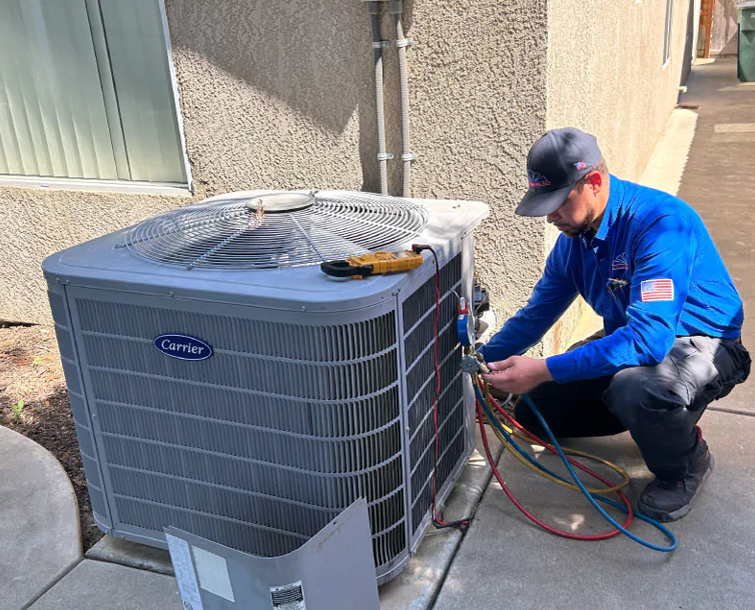
Mechanical Air LLC technician performing professional HVAC diagnostics, refrigerant checks, and system servicing.
New 2026 Title 24 energy codes & EPA refrigerant mandates are transforming commercial HVAC planning across Fresno and the San Joaquin Valley.
FRESNO, CA, UNITED STATES, August 10, 2026 /EINPresswire.com/ -- A confluence of updated Title 24 standards and federal EPA AIM Act refrigerant transitions is changing how commercial property owners in Fresno and the San Joaquin Valley plan HVAC replacements and major system upgrades.
Commercial property owners and facility managers across California’s Central Valley are confronting significant changes in mechanical infrastructure planning this year. Driven by the simultaneous implementation of California’s updated Building Energy Efficiency Standards (Title 24, Part 6) and the ongoing federal phase-down of high-GWP hydrofluorocarbon (HFC) refrigerants under the U.S. Environmental Protection Agency’s (EPA) AIM Act, commercial HVAC replacement projects increasingly require compliance with updated energy efficiency and refrigerant requirements.
The price surge represents a structural shift in how commercial real estate assets are retrofitted and maintained. Historically, building managers could address failing mechanical components through targeted, piecemeal repairs—such as swapping out a single condenser coil or compressor module. However, the dual burden of state energy efficiency benchmarks and federal chemical safety transitions has made partial system swaps technically infeasible and legally non-compliant for most commercial applications.
As a result, localized equipment failures in retail complexes, industrial warehousing, agricultural cold-storage hubs, and office buildings are rapidly escalating into full-scale, capital-intensive infrastructure modernizations.
The Dual Regulatory Squeeze: Title 24 (2026) and the EPA AIM Act
The capital cost escalation stems from two overlapping regulatory deadlines taking full effect:
California’s 2026 Title 24, Part 6 Building Energy Code Updates: The California Energy Commission’s (CEC) updated standards, which officially took effect on January 1, 2026, apply to new nonresidential buildings as well as qualifying additions and major alterations. The updated code emphasizes expanded integration of energy-efficient heat pumps, advanced demand-response automation strategies to shift electrical loads away from peak grid hours, higher building efficiency, and improved energy performance. The California Energy Commission projects these standards will save approximately $4.8 billion in energy costs over 30 years while reducing greenhouse gas emissions by approximately 4 million metric tons (equivalent to the annual energy consumption of over half a million homes). Furthermore, the framework introduces modern compliance metrics like Long-term System Cost (LSC) to measure projected present value costs over a 30-year lifecycle.
The Federal EPA AIM Act A2L Refrigerant Shift: Under federal mandate, traditional R-410A refrigerant—which carries a Global Warming Potential (GWP) of 2,088—is being phased out of new equipment manufacturing in favor of low-GWP, "A2L" classified refrigerants, primarily R-454B and R-32. A2L refrigerants carry a "mildly flammable" safety classification from ASHRAE, necessitating entirely redesigned system architecture.
Because A2L refrigerants operate at different pressure dynamics and require specialized safety mitigation—including integrated leak detection sensors, spark-free electrical contactors, and modified ventilation logic—new A2L condensing units cannot be retrofitted into legacy R-410A air handlers or duct networks.
When a major component fails in a legacy commercial unit, property owners are often required to evaluate whether a broader system replacement is necessary to comply with applicable federal refrigerant requirements and state energy code provisions.
Central Valley Microeconomic Impact: Heat Extremes Meet Infrastructure Limits
While regulatory compliance affects commercial real estate statewide, the financial impact is particularly pronounced in the San Joaquin Valley.
In markets like Fresno, Clovis, Madera, and Visalia, commercial HVAC systems operate under extreme conditions. Extended summer periods featuring consecutive days above 100°F create severe thermal load on rooftop equipment. High ambient operational temperatures accelerate mechanical wear, causing commercial units in the Central Valley to reach end-of-life status 20% faster than identical equipment installed in coastal microclimates.
Furthermore, the regional economy relies heavily on uninterrupted climate control. Agricultural packing facilities, cold-storage logistics nodes, and pharmaceutical warehousing face severe operational risk if cooling capacity is compromised. The transition delay—exacerbated by specialized supply chain lead times for certified A2L commercial equipment—means that emergency mechanical failures now carry both higher capital replacement costs and longer operational downtime risks.
Macroeconomic Data and Regional Cost Benchmarks
Data compiled from regulatory impact studies, engineering assessments, and regional market indices highlight the shifting regulatory environment for commercial real estate in Northern and Central California.
Equipment Surcharges: Manufacturer-level production redesigns for A2L-compliant commercial units, combined with factory-installed refrigerant mitigation systems, have added a 12% to 18% base equipment price premium.
Strategic Planning and Capital Expense Modeling
Industry analysts emphasize that commercial property managers must transition from reactive repair strategies to structured, multi-year capital outlay modeling to avoid catastrophic operational interruptions during peak demand seasons.
"The era of executing a quick, drop-in component repair on a commercial rooftop unit has effectively come to an end," said a senior technical strategist at Mechanical Air LLC, a Fresno-based commercial mechanical contractor. "Under the current regulatory framework, mixing legacy system components with new low-GWP refrigerant architecture violates both federal safety codes and state energy mandates. When an older compressor or coil fails today, property owners are looking at a full structural and electrical retrofit."
The technical demands of the 2026 standards require specialized engineering oversight before permits can be pulled in Central Valley jurisdictions. Municipal building departments across Fresno and surrounding counties are strictly enforcing mandatory load calculations (ACCA Manual N for commercial applications) and Title 24 energy compliance documentation prior to approving equipment change-outs.
"Building owners who fail to audit their mechanical assets today risk being caught off guard by an unbudgeted six-figure capital replacement during the hottest months of the year," the Mechanical Air LLC spokesperson added. "Commercial asset managers in Fresno are strongly advised to audit their existing equipment ages, evaluate remaining refrigerant availability, and build mandatory 2026 Title 24 compliance into their three-to-five-year financial planning models."
About Mechanical Air LLC
Mechanical Air LLC is a premier commercial heating, ventilation, air conditioning, and refrigeration (HVAC/R) engineering contractor headquartered in Fresno, California. Specializing in complex commercial retrofits, industrial cooling, agricultural cold-storage infrastructure, and Title 24 energy compliance management, Mechanical Air LLC serves commercial real estate owners, agricultural operations, and industrial facilities throughout the San Joaquin Valley. The company provides comprehensive mechanical asset audits, custom system design, predictive maintenance programs, and regulatory compliance consulting tailored to the unique climate and economic conditions of Central California.
Luis Chavez
Chavez Web Design, LLC
+1 559-553-5000
email us here
Visit us on social media:
LinkedIn
Instagram
Facebook
YouTube
☀️ Get Your AC Installed Before Fresno Heat Hits | 2026 ❄️
Legal Disclaimer:
EIN Presswire provides this news content "as is" without warranty of any kind. We do not accept any responsibility or liability for the accuracy, content, images, videos, licenses, completeness, legality, or reliability of the information contained in this article. If you have any complaints or copyright issues related to this article, kindly contact the author above.
