

Federal AI Shift Could Widen the Small-Business Contracting Divide

Milwaukee entrepreneur Natasha Broxton uses an AI-supported workflow to review government-contracting information and organize submission requirements.
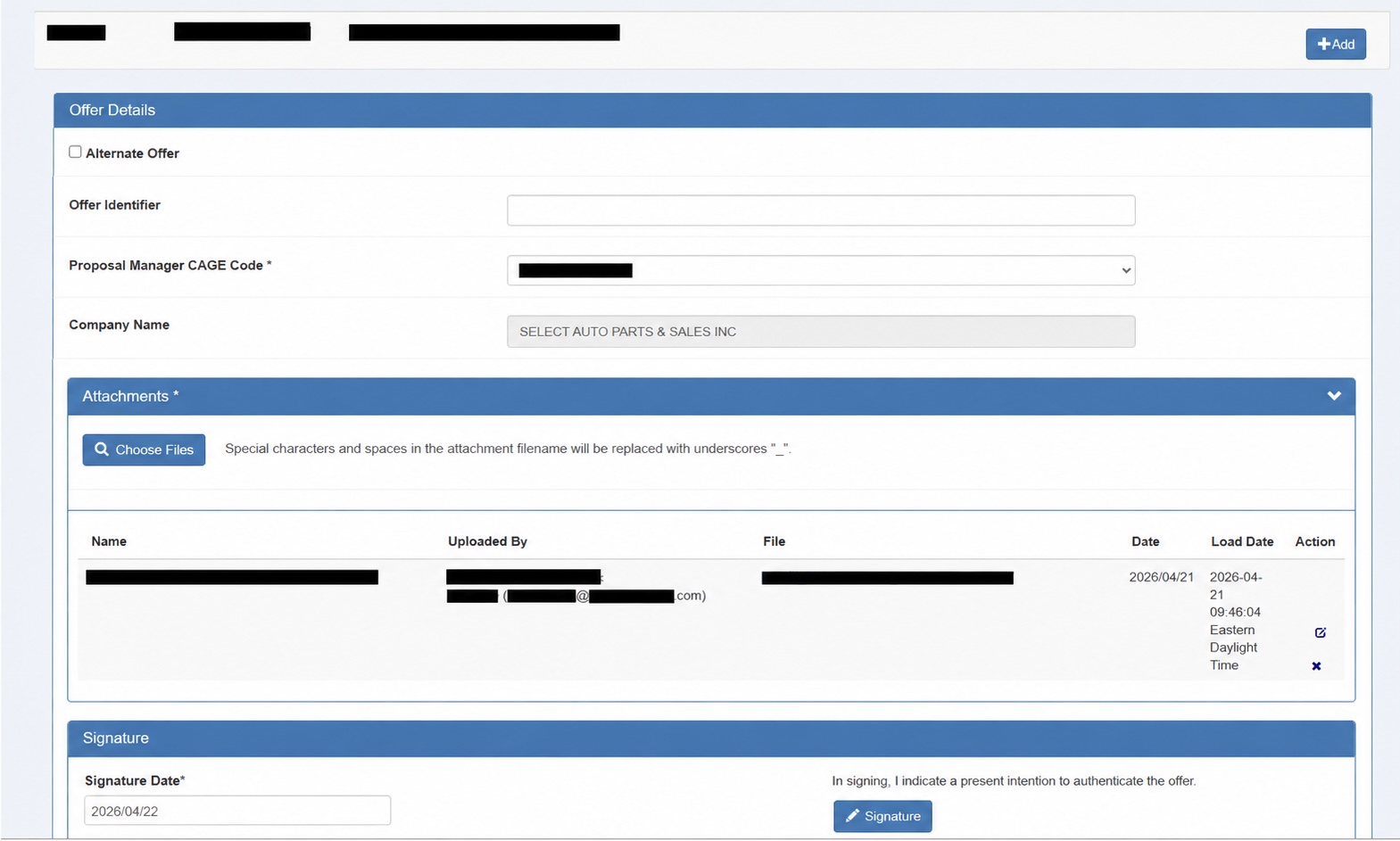
Documentation from a successful Select Auto Parts submission associated with a multiyear government contract.
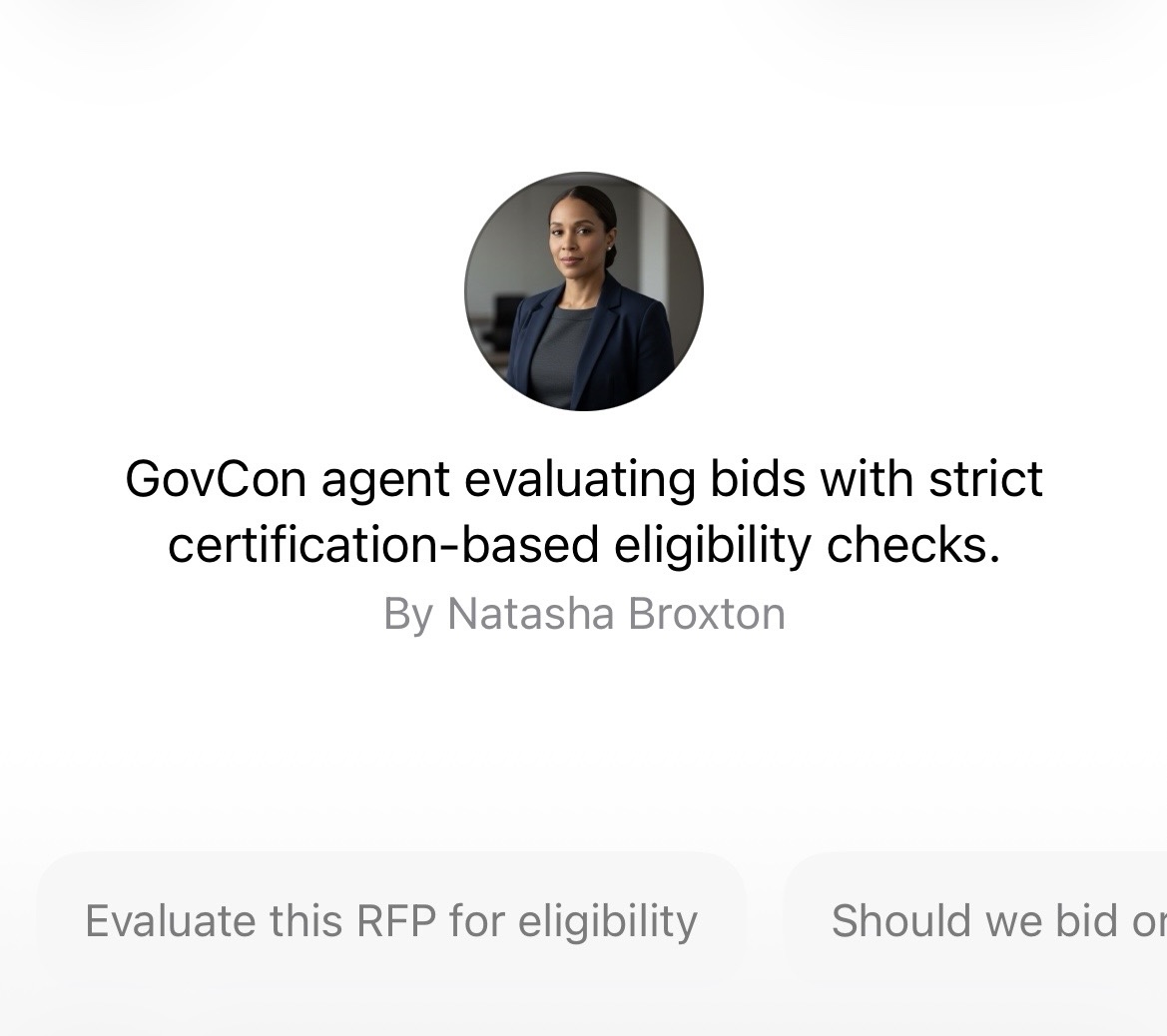
Monique GPT, an internal AI assistant developed by Natasha Broxton, helps organize opportunity requirements for human review.
As federal procurement modernizes, unequal AI access may affect local jobs, supplier competition and who benefits from public spending.
The stakes extend well beyond individual business owners. Federal contracts support local payrolls, specialized suppliers and jobs across manufacturing, construction, technology, defense and professional services. When more qualified businesses can compete, agencies gain more supplier choices and taxpayers benefit from stronger competition. When the cost and complexity of participation rise, qualified small firms may be less able to compete, reducing the diversity of the supplier base available to agencies.
Small businesses remain central to the federal marketplace. The U.S. Small Business Administration reported that small firms received nearly 28 percent of federal prime-contract dollars in fiscal year 2025, representing $179 billion. Including prime contracts and subcontracts, federal awards to small businesses totaled nearly $273 billion and supported an estimated 1.2 million jobs.
At the same time, Office of Management and Budget policy directs agencies to accelerate responsible AI use and improve how the government acquires AI. OMB’s AI acquisition guidance emphasizes efficient and competitive procurement, performance monitoring, risk management, protection of government interests, and reducing unnecessary vendor lock-in.
Those developments are beginning to intersect. As agencies modernize procurement and AI use, small suppliers that lack dedicated proposal, compliance, or technology capacity may face greater difficulty evaluating and responding to opportunities efficiently.
A government opportunity can include dense solicitations, amendments, attachments, eligibility rules, certifications, performance requirements, deadlines and contract clauses. Larger contractors can distribute that work among business-development, legal, proposal and compliance teams. In a smaller company, the owner or a limited staff may have to perform every step while continuing to operate the business.
AI does not make a company qualified for federal work, and it should not make legal, pricing or compliance decisions without human review. But responsibly designed tools can help a business organize requirements, compare an opportunity with its capabilities, identify missing information, track deadlines and surface questions that require expert judgment.
That difference in processing capacity could become a new contracting divide. A qualified local supplier may never compete if the right opportunity is buried under too much information or discovered too late. Communities can lose potential jobs and revenue when capable firms remain outside the federal supplier base. Agencies can also lose access to specialized knowledge, local capacity and new competitors.
“The point is not to use AI to pretend a small business is a large contractor,” said Natasha Broxton, founder and CEO of Select Auto Parts & Sales in Milwaukee. “The point is to help qualified businesses understand requirements faster, protect their time and make better decisions without sacrificing compliance.”
Broxton’s company offers one example of the technology’s practical use. She developed an internal AI assistant called Monique GPT to support the human-led process of reviewing contracting opportunities and organizing submission requirements. Select Auto Parts used that workflow during a successful federal-contract submission that resulted in a multiyear award, according to company records.
The award is not the larger story. It is evidence of what can become possible when a capable small business has systems that help it move from information to action.
The same experience also shows why safeguards matter. Confidential business and contracting information must be protected. AI outputs must be verified against original solicitation documents. Owners remain responsible for the accuracy of submissions, the promises they make and the company’s ability to perform.
“If modernization only works for businesses that already have large teams and large technology budgets, it will narrow opportunity,” Broxton said. “Chambers, procurement assistance providers and economic-development organizations can help prevent that by teaching practical AI literacy alongside contracting fundamentals.”
Government-contracting education has traditionally emphasized registration, certifications, capability statements, market research and proposal development. Those fundamentals remain essential. AI readiness and workflow design may now belong in the same toolkit, particularly for firms trying to assess opportunities with limited time and staff.
A practical screening process can begin with five questions: Is the company eligible? Is the work within its real capability? Can it meet the deadline? Can it perform profitably? What must be submitted to remain compliant? AI can help organize the evidence, but people must make the decision.
The public choice is not between technology and human judgment. It is whether small businesses will receive the training and access needed to use both. As federal procurement becomes more technology-driven, maintaining a broad and competitive supplier base will require modernization on both sides of the marketplace.
For interviews, keynote presentations and executive workshops with Natasha Broxton, visit https://alituragroup.com/speaking.
About Natasha Broxton
Natasha Broxton is an award-winning CEO, entrepreneur, speaker and AI consultant. She is the founder and CEO of Select Auto Parts & Sales in Milwaukee and founder of Alitura Group. Her work focuses on practical AI implementation, operational systems, government-contracting readiness and helping business leaders turn complex information into usable business processes.
Natasha Broxton
Alitura Group
+1 414-763-2475
email us here
Visit us on social media:
LinkedIn
Instagram
Facebook
YouTube
Legal Disclaimer:
EIN Presswire provides this news content "as is" without warranty of any kind. We do not accept any responsibility or liability for the accuracy, content, images, videos, licenses, completeness, legality, or reliability of the information contained in this article. If you have any complaints or copyright issues related to this article, kindly contact the author above.
